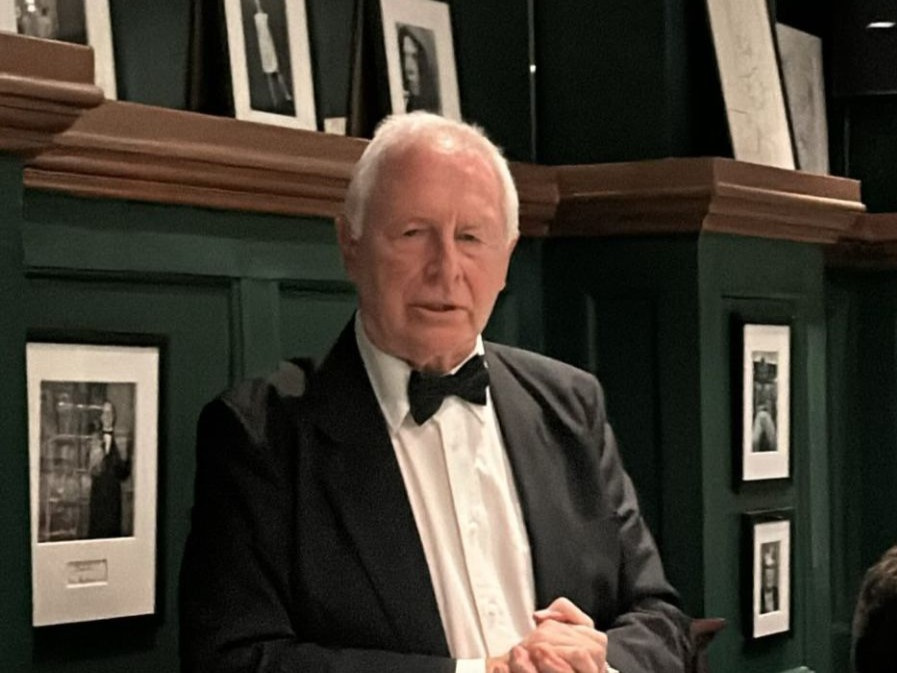
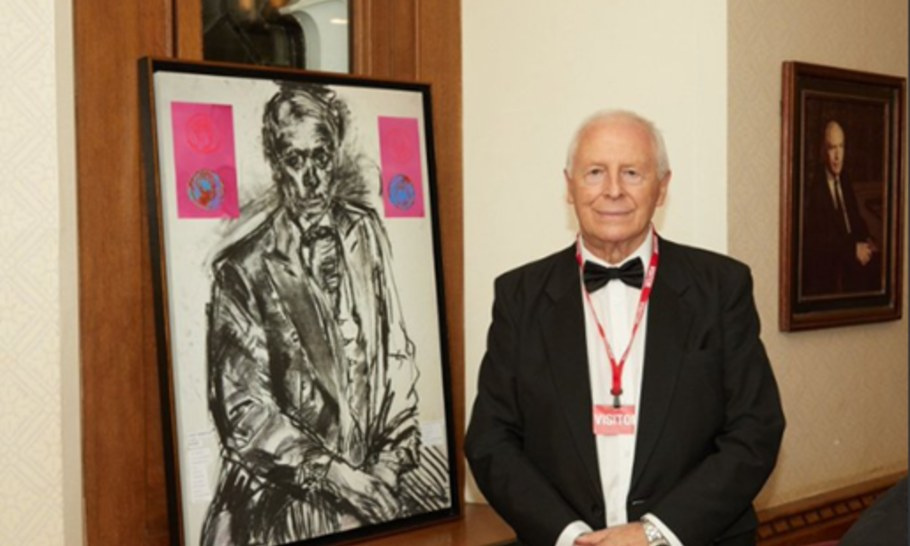
There is a particular sorrow in an ending like this, and we will not pretend otherwise. Barry Martin came to us in the last November of his life, delighted to have found the Club and impatient to throw himself into it — the dinners, the company, the whole leisurely business of belonging. He made a moving speech about it. He was looking forward, as new members do, to years of it. He had a few weeks. It is a hard thing to write an obituary for a friend one had scarcely begun to make, and harder still knowing how much the friendship promised.
What the Club lost in December, the wider world had known for six decades.
Motion as philosophy
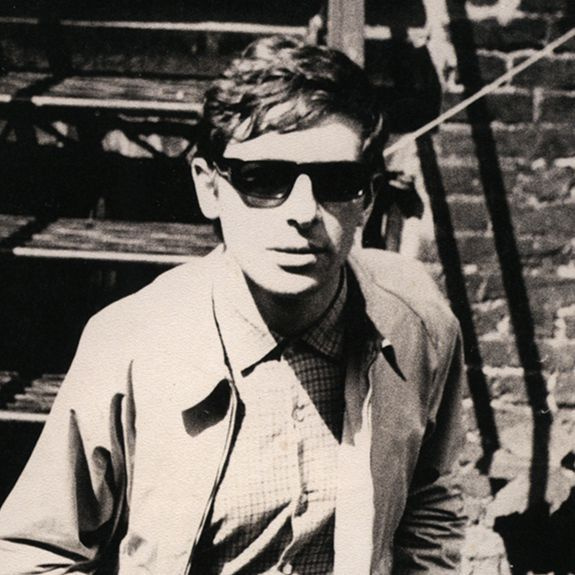
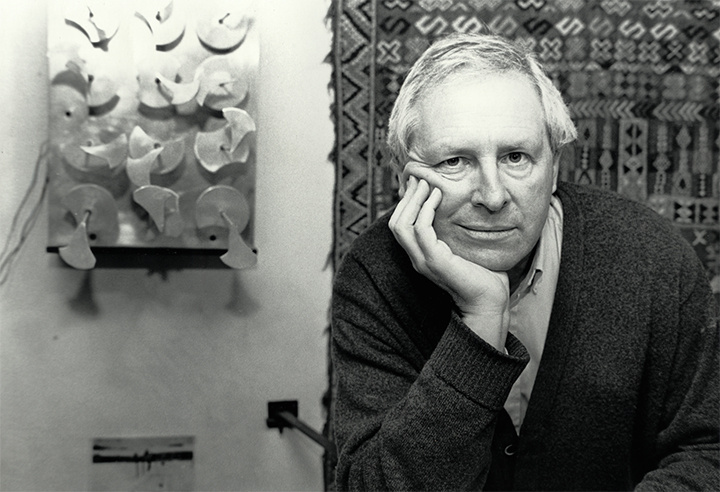
He was born in Amersham on the twentieth of February 1943, studied at Goldsmiths' and then at St Martin's School of Art, and emerged in the middle 1960s as the most versatile British exponent of a movement the country had barely heard of: kinetic art, in which the work does not merely depict motion but performs it. To a generation still labouring in the shadow of Henry Moore, and offered only the Anglo-American menu of Pop and Minimalism, kinetic art was a European door into somewhere new, and Martin walked through it further than any of his contemporaries.
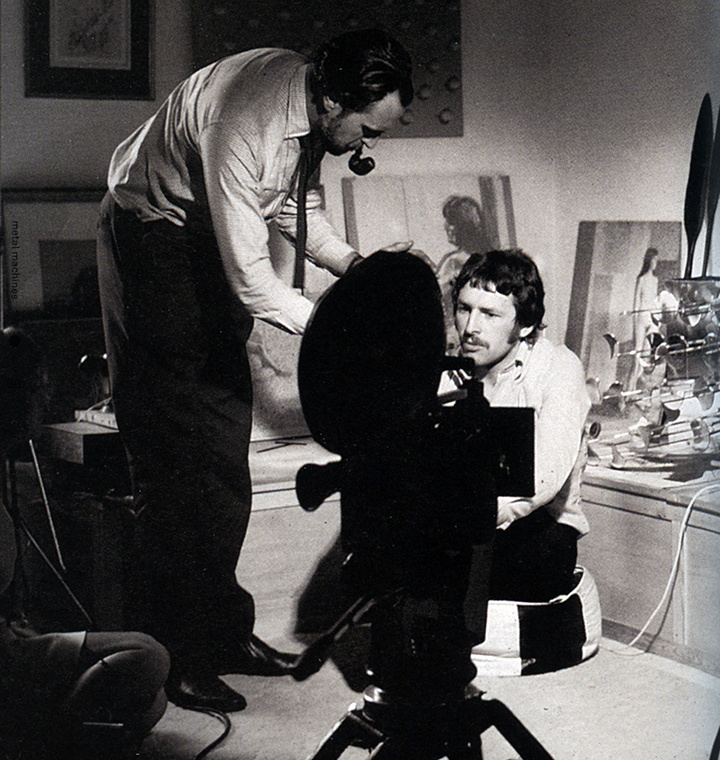
His constructions did what paintings cannot: they changed while you watched. Tret, made in 1965 and later shown at the Hayward's great survey of kinetic art, was a structure of eighty-one steel rods that moved slowly in and out, each governed by its relation to the next and to the proportions of the whole — form as something alive, continuously rearranging itself, never twice the same. He worked across sculpture, film, performance and the making of whole environments, but the constant beneath all of it was drawing, which he understood not as decoration but as a language: a system of signs, and an instrument of enquiry.
His work entered the collections that confer permanence — the Tate, the Victoria and Albert, the National Portrait Gallery, the British Council, the Musée d'Art Moderne in Paris — and stayed there. And he gave the knowledge back: he taught at the Royal College of Art, the Slade, Goldsmiths' and the Royal Academy Schools, where he was remembered less for any house style than for an insistence that his students think for themselves. He was that rare teacher who wished to produce not imitators but independents.
From 1989 he lived in the gate lodge of Chiswick House, which he rescued from near-dereliction with the architect Theo Crosby and made his studio for the rest of his life. In its gardens, in 2014, he staged perhaps his purest statement: dancers of the Ballet Rambert moving around the garden temple in four acts, the whole thing composed, in his words, as living kinetic sculpture — architecture, rhythm and the human body resolved into one moving work.
The knight's move
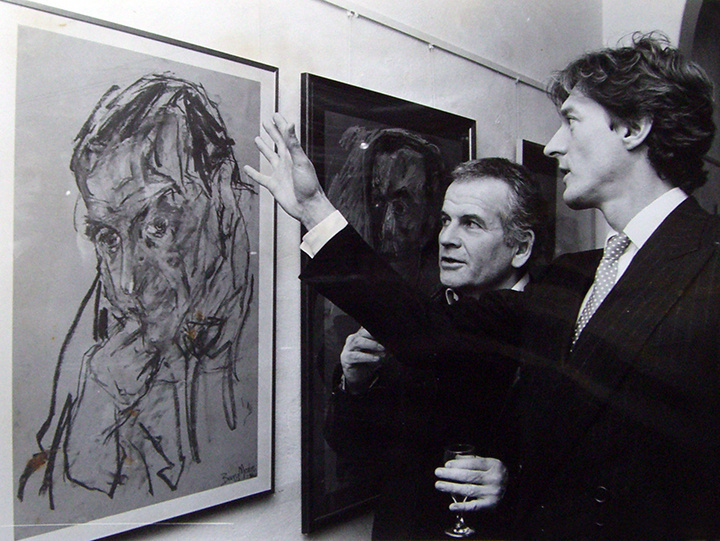
Movement drew him to the most intellectual of games, and chess was the passion of his life as surely as art was its profession. He did not merely play; he thought about the game as a philosopher and honoured it as an artist. He won the Chelsea Arts Club championship — the trophy presented, in 1989, by Garry Kasparov himself — co-organised a symposium on chess and art at the Tate, and served as the official artist of the 1993 world championship match between Nigel Short and Kasparov. Among all the artists who have taken the sixty-four squares as their subject, he has been called perhaps the most important.
It was chess that binds his story most closely to the concerns of this Club and its friends, for Barry Martin's great hero was Howard Staunton — the Victorian master who was also the organiser of the first international tournament, a Shakespearean scholar of standing, and the man whose name the standard chess set still bears. In Staunton's fusion of intellect, design, structure and cultural reach, Martin recognised something like his own mind, and he gave years to seeing that legacy properly honoured.
Through the Howard Staunton Society, founded in 1993, he served first as Honorary Secretary and then as Vice-Chairman, shaping its direction over many years. Two acts of commemoration stand as his memorial within it. Staunton had lain since 1874 in an unmarked grave at Kensal Green; Martin designed the granite headstone, themed around the knight, that at last marks the spot. And it was he who was instrumental in the blue plaque at Notting Hill Gate that records Staunton's place in British cultural life. A sculptor who spent his career making the immaterial move, he ended by fixing a great man's memory permanently in stone.
The friend
Those who knew him speak, without exception, of warmth, wit and a quiet brilliance — a companion whose talk moved as freely as his sculptures, ranging across art, chess, literature, philosophy and history and never once dull. His influence ran far beyond the galleries, living on in the artists he guided and the friendships he kept with loyalty and kindness. He is survived by his wife Sarah, his daughter Jessie and their family, and by a wide circle of friends who feel the loss keenly.
The Club's own grief is of a stranger and smaller kind — the grief of the almost, of the friendship interrupted at its very first word. We had him for a season. We would gladly have had him for twenty years, and on the evidence of that single autumn we should have been the richer for every one of them.
His whole life's argument was that form is never static — that intelligence, curiosity and creativity keep moving, and that the moving is the point. It is a consoling thing to hold on to now. The rods still slide, the discs still turn, the dancers still circle the temple in the mind's eye. Barry Martin made motion into meaning, and the motion does not stop merely because the man is still.
Barry Martin (20 February 1943 – 12 December 2025), a former Eccentric Club member.
Comments (0)
No comments yet.
Commenting is for subscribers. Sign in or subscribe to join the conversation.