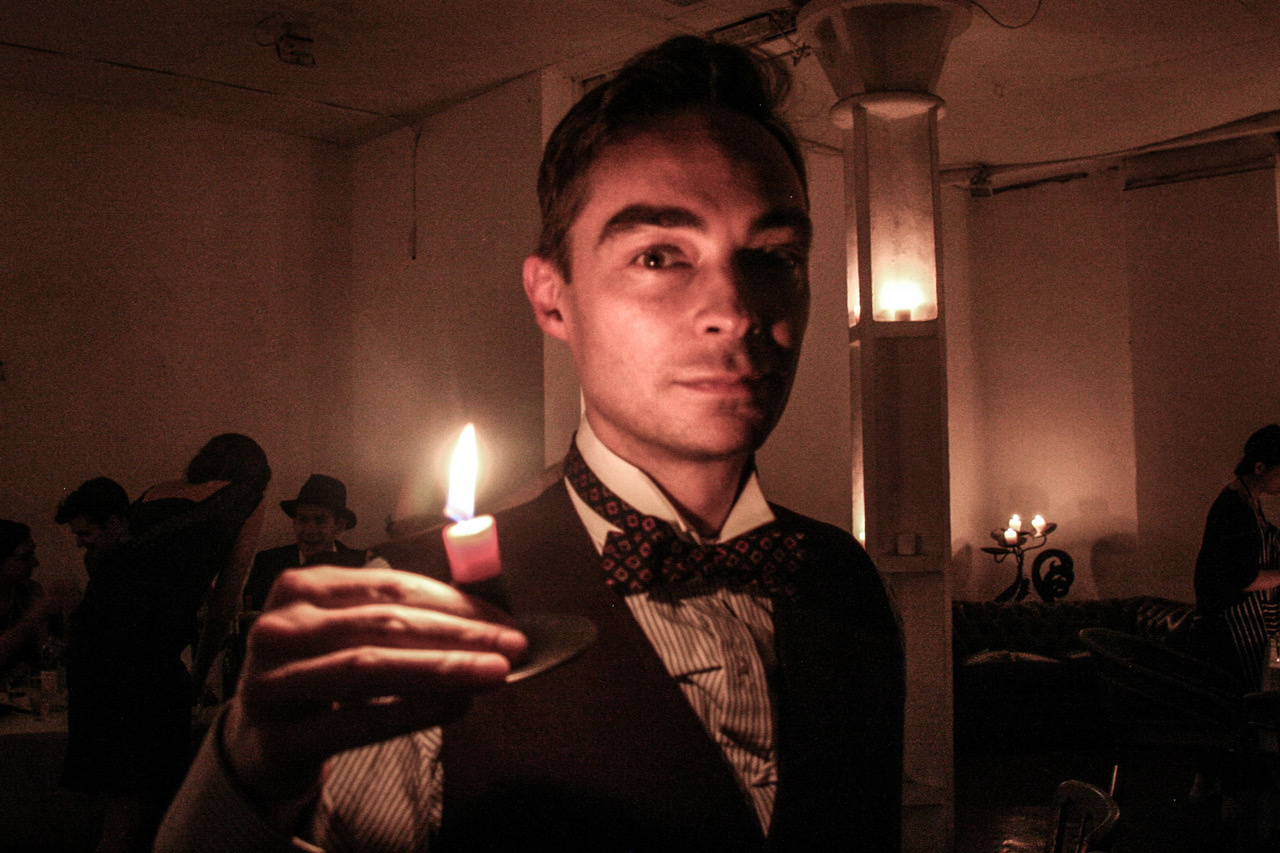
Clayton Hartley - founder of the Candlelight Club, former Executive Editor of Reader's Digest, fifteen years the editor of Resign! - on candlelight, the council man who came to call (but didn't stay for a drink), why grown adults still need permission to dress up, and the rock-stardom that hasn't happened. Not yet, anyway.
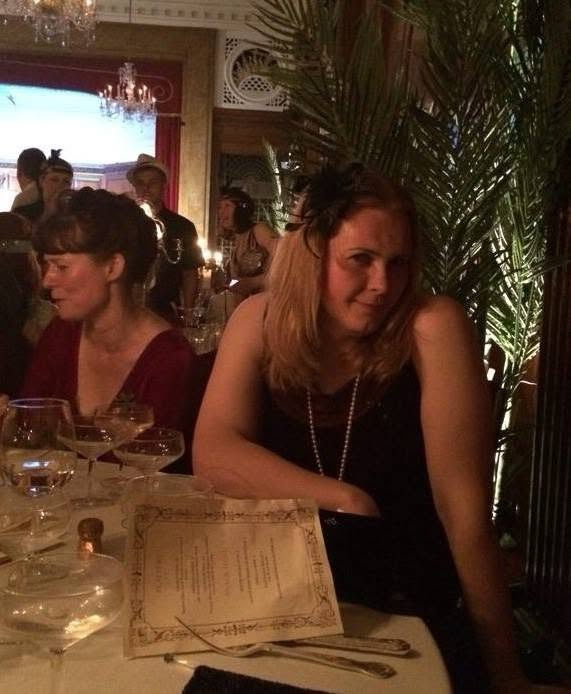
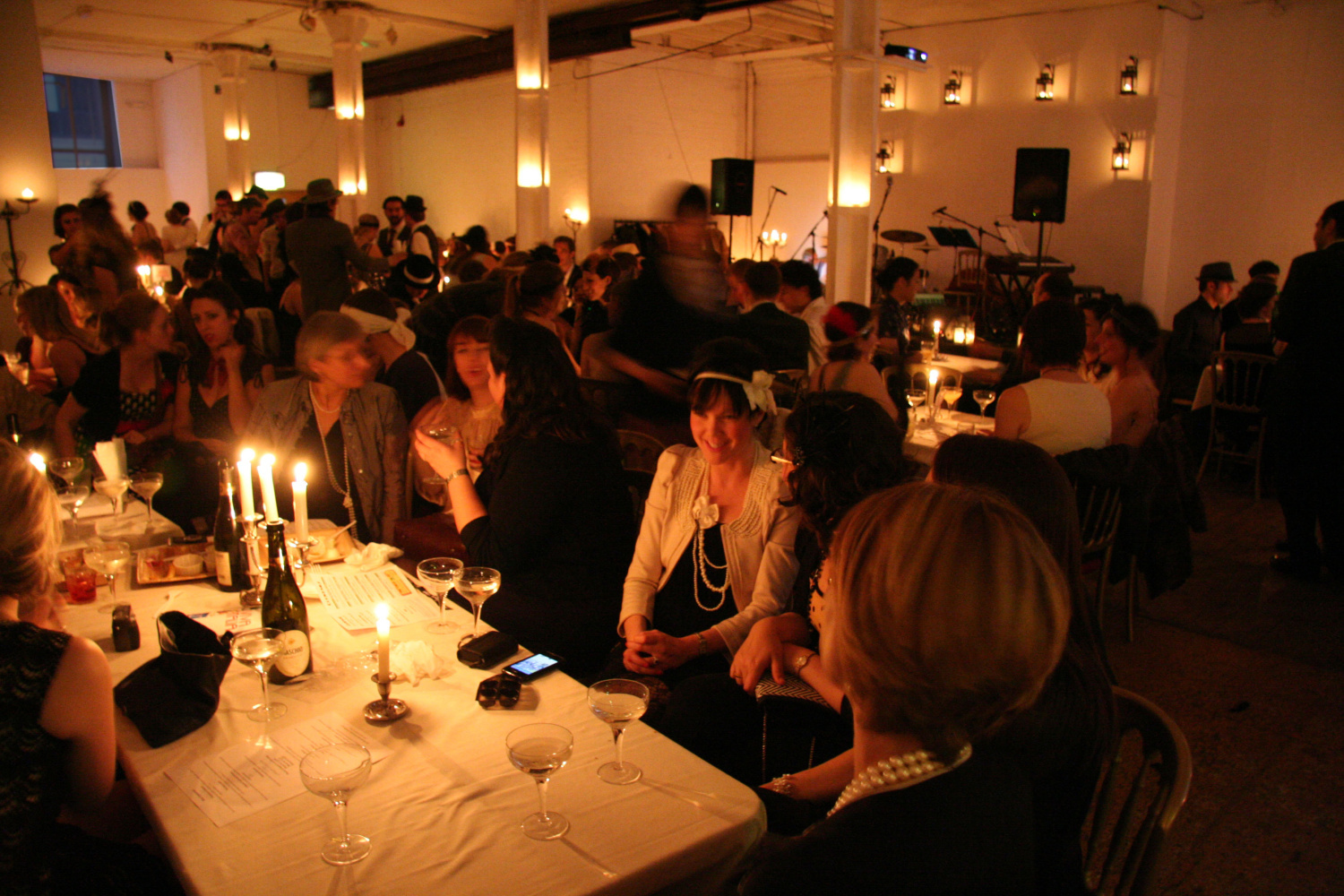
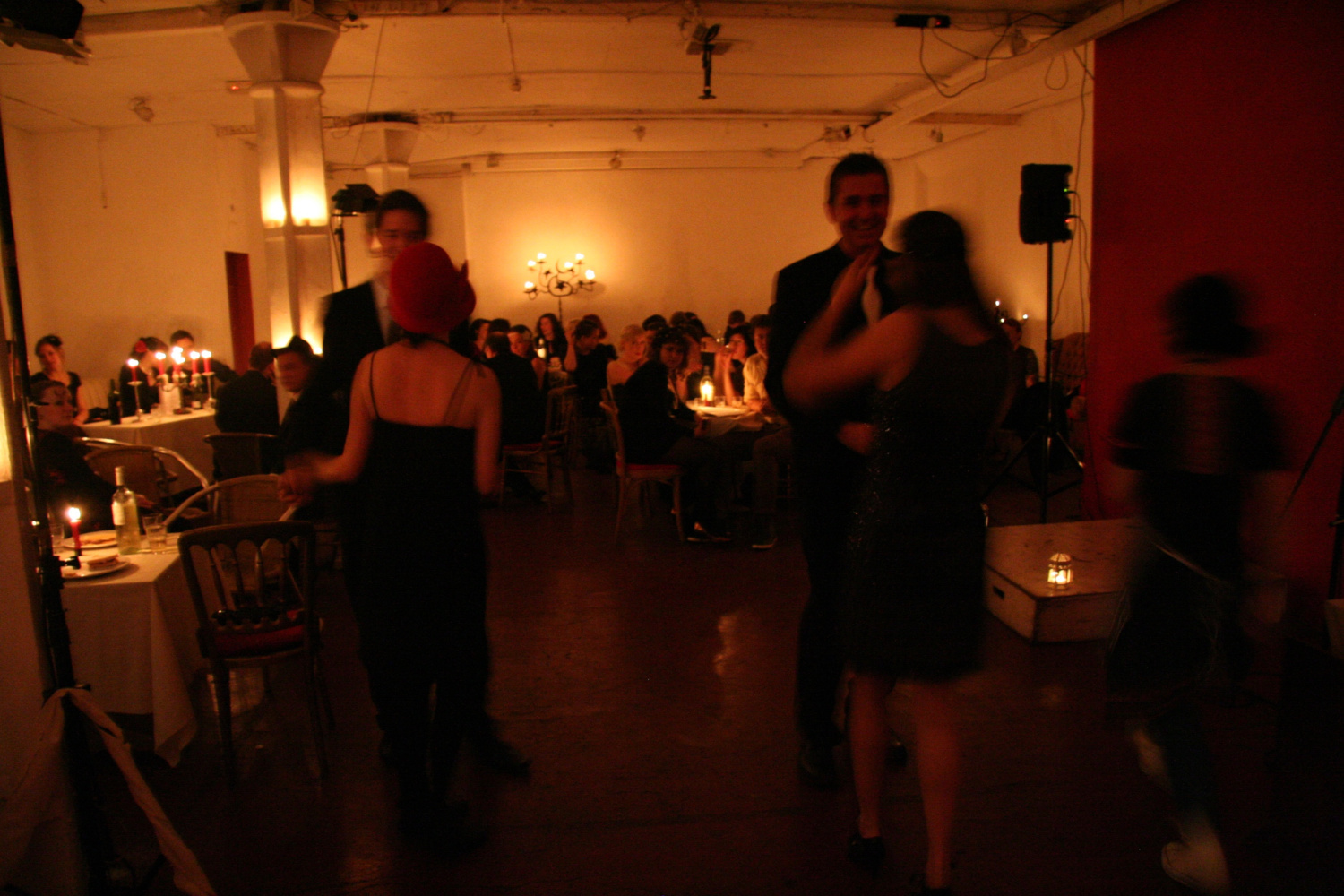
The most visually arresting thing about the Candlelight Club is that you can barely see. The rooms are lit entirely, or very nearly, by candles - squat pillars in cast-iron niches, wrought-iron candelabra, a low amber glow that could be 1926 as easily as any Tuesday in the twenty-first century. The address is a secret until a day or two beforehand. Everyone is in period dress. There is jazz. And somewhere in the middle of it, presiding, is Clayton Hartley, who dresses like this all the time.
It began in October 2010, of the unlikeliest raw materials - a redundancy, and a chance conversation outside a party - and was expected to amount to very little. Instead, it became his life's work, and now runs alongside a freelance trade in book editing, photography, and live sound, plus a sideline on bass in a band called the Furbelows. Quite how a magazine man on the wrong end of the recession came to preside over London's most durable speakeasy is best told in his own words - so we caught him between candles and his new life in far-west Cornwall.
Were you an odd or eccentric child, or did the oddness arrive later? Are you still that child, and what does it feel like to be suddenly sixty?
Do you think I'm odd? I think I'm perfectly normal.
But one of the benefits of getting older is that you care less what other people think of you, which empowers you to do the right thing and not be swayed by what society at large considers normal.
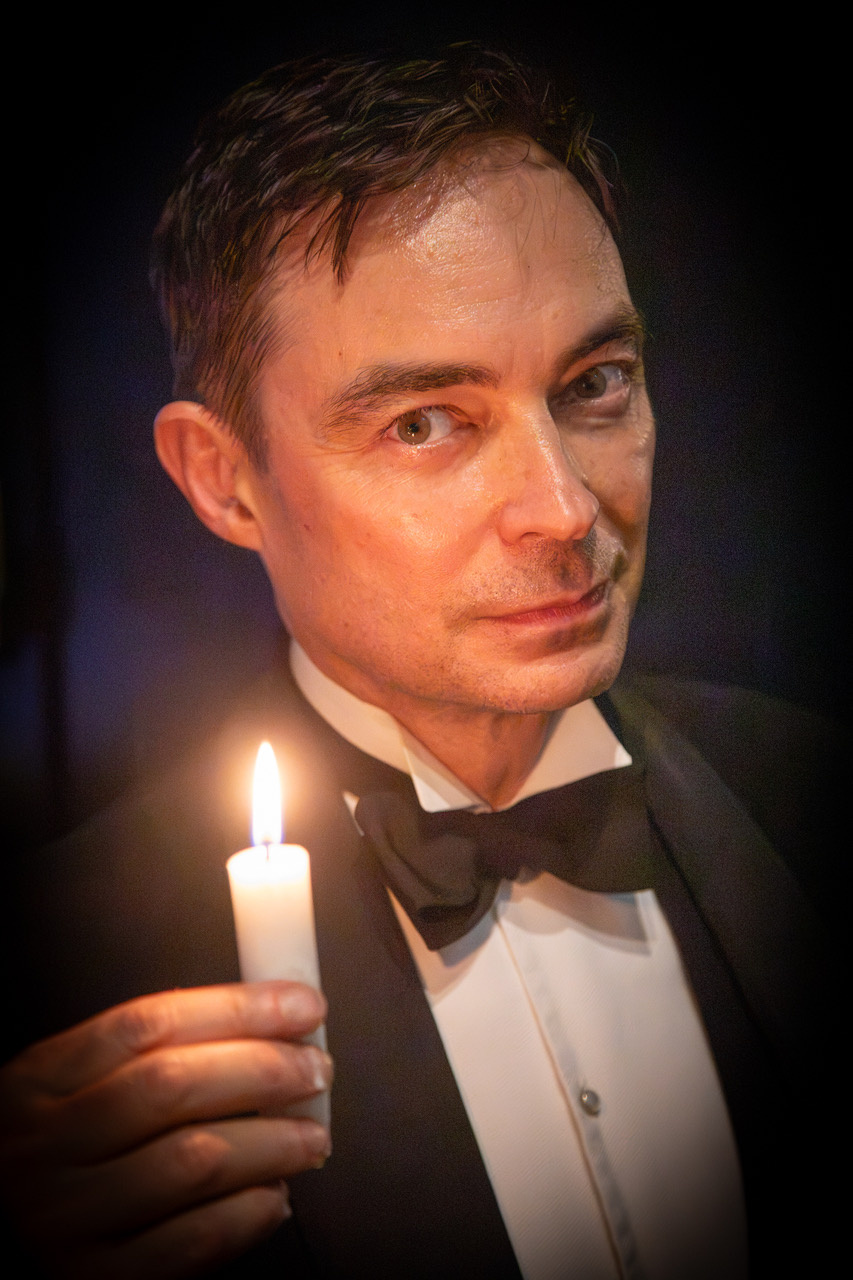 © Henry Ball, 2026Clayton at Sixty.It makes life more comfortable - especially if you're inclined to dress in a manner that was last "normal" about a hundred years ago. And one of the advantages of dressing in a classic rather than a fashionable way: you can wear the same clothes, decade in, decade out. As for sixty, it wasn't really sudden; it's been creeping up on me for a while. I don't feel any different from the day before - though at least I now qualify for a Senior Citizen's Railcard.
Summer 2010, a New Sheridan Club party, and an American (or still more Canadian?) stranger walking past who had just come back from New York. Is that when a life-changing decision happened? How much of that story is true?
It's all true, though he was Anglo-American rather than Canadian - his father English, his mother American. Although, technically, I am Canadian, so there's a connection. Yes, I suppose it was life-changing. After twenty years in the magazine business, I'd recently been made redundant and wasn't having much luck finding a new job, so when Nick and I fell into conversation outside the NSC party - at the short-lived Salon d'Été, a project by Ed Saperia - and hatched the idea of the Candlelight Club, it seemed worth taking a punt. I didn't have much else on. If I'd still been in gainful employment, I probably wouldn't have gone ahead - it would have been too much work alongside a full-time job, and I certainly wouldn't have had the courage to ditch the day job. But since the day job had already ditched me, why not? I honestly didn't think it would last more than six months before the punters lost interest and moved on. And yet here we are.
The first time you blew out the electric light, you had no idea whether anyone would be able to see. What did the room look like?
The idea of lighting the place by candles came from the fact that the first venue happened to have lots of wrought-iron candelabra, and the rooms had cast-iron pillars with niches in which you could safely stand squat pillar candles. The rooms were otherwise pretty blank, white spaces, so the lighting helped with the ambience - and it made sense if you were presenting the place as a fly-by-night speakeasy that probably wouldn't have a power supply. But we had no idea whether candles alone would shed enough light to see by, so it really was a hallelujah moment when we lit them all and turned out the electric light. At later venues it hasn't always been possible to use candles and nothing else - anywhere with corridors and stairwells can't practically or safely be lit by candlelight alone - but we still have a great many in use.
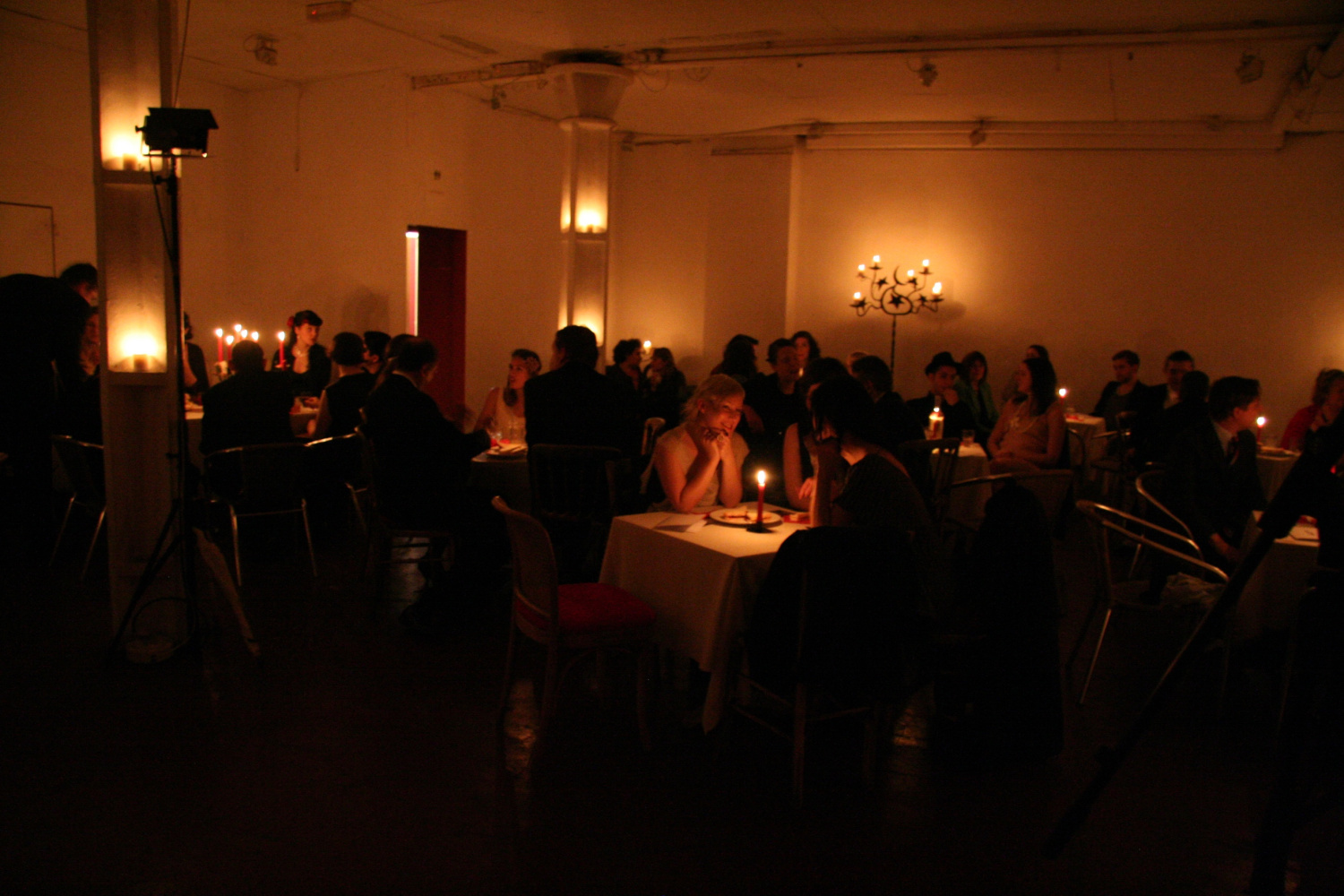 © Henry Ball, 2010First Candlelight Club
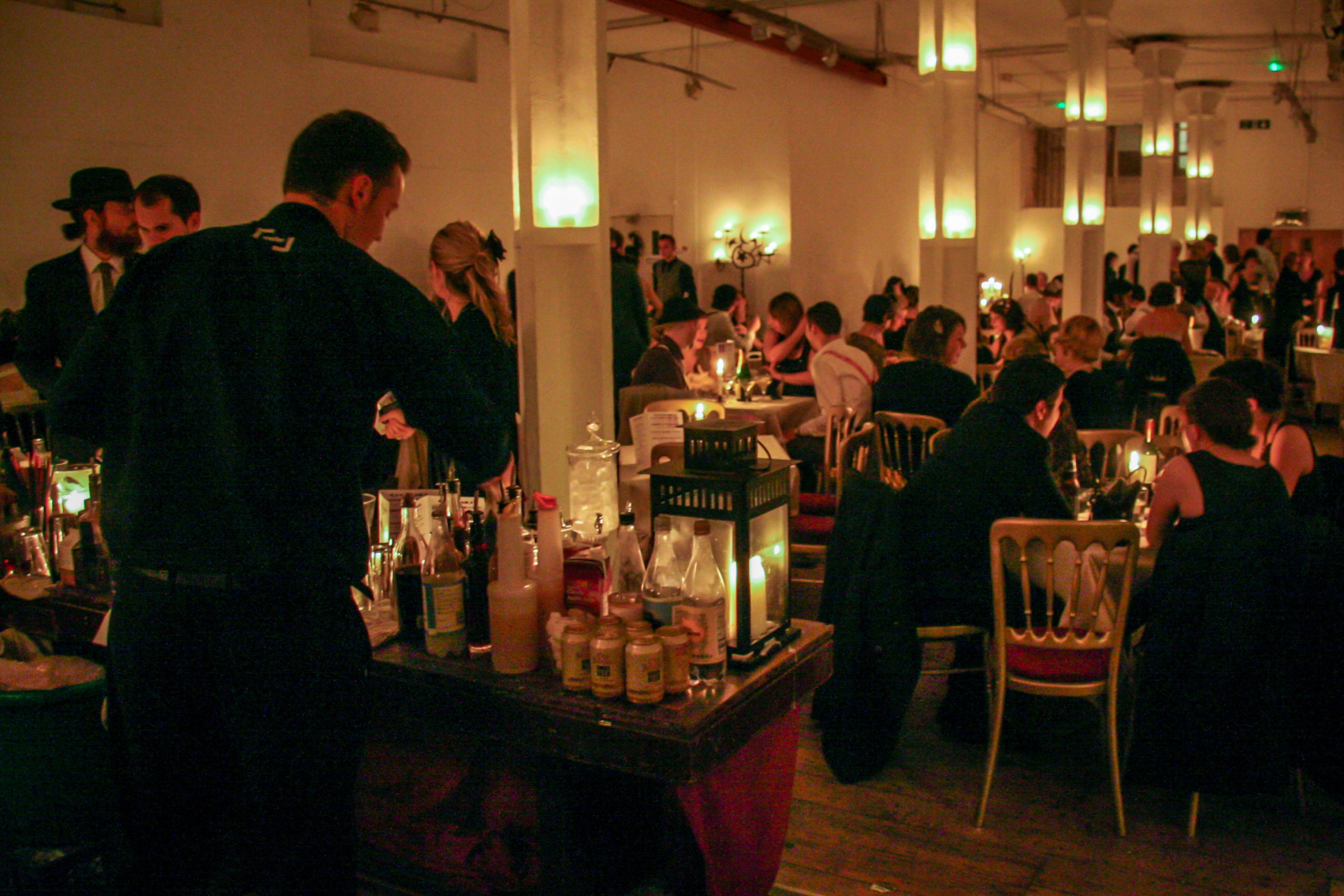 © Henry Ball, 2010First Candlelight ClubA man from the council pointed out you had no licence. Did he stay for a drink?
No, but they were very nice about it - appreciating the irony that we were a pretend speakeasy which had turned out to be a genuine speakeasy. He'd actually been called to a neighbouring venue, which quite possibly did have a problem with underage drinking, but he noticed something going on in our space, which he knew wasn't licensed. The overall building did have a licensed café, and the owner had assumed the licence covered the whole place, but it did not. We had a couple more visits over the years, and the officer always said how nice it looked, and that ours was precisely the sort of thing they wanted to licence - their attitude wasn't to look for parties to close down, but for ways to boost the local economy, as long as it was all conducted safely and within the law. The Candlelight Club's core demographic was twenty-five to thirty-five, so the licensing officers could tell at a glance there was no underage boozing going on.
What else went wrong in the first year?
Nothing I can recall. We got round the licensing issue with temporary event notices - temporary licences - but you have to apply at least ten working days beforehand, and I have a feeling there was one occasion we missed the deadline and ended up sneakily going ahead anyway, sweating about whether the licensing team might happen by. Those early months were extraordinary: we didn't advertise, yet word got out, and after the first four months it suddenly took off. Through spring 2011 we were doing three events a month and selling out each one. We experimented, especially with the food - first sandwiches, then a complimentary buffet, then street-food stalls in the courtyard. It was a long while before we started running a full kitchen ourselves and offering a three-course dinner.
Every bar in London now calls itself a speakeasy. Has the word been ruined - does the secret address still mean anything?
The secret location was intended as a bit of theatre, to bolster the idea that we were a speakeasy, but it also has the practical benefit that we never get gate-crashers - only ticket holders know where it is. It can be a headache if someone doesn't get the email with the address, so these days I send a bulk text as back-up. Some people just don't read the email even when they do get it; they simply Google us. The trouble was that, since we had no permanent premises, the address on our Google business profile was actually my own house. More than once my wife answered the door to find a couple in flapper gear on the doorstep. It even happened on New Year's Eve once! Anyone who's been more than once soon realises it's the same place each time - though, to keep people on their toes, we've moved between several venues over the years. We've just done our second event at an exciting new one.
You change the cocktail menu, mixing genuine Prohibition recipes with new inventions. Were the drinks of the period actually any good?
For a long time we had a completely different menu each time, and for a while it was my job to research and devise it - quite a bit of work when you're running events every three weeks. But for some years now we've had a core menu that stays the same; it's easier to maintain quality if the staff aren't asked to make entirely new drinks each time. We realised early on that the majority of guests at any event have never been before, so for most of the room the menu is always new anyway.
As for whether period drinks were any good - yes, they were. There's a myth that cocktails were invented during Prohibition to mask the taste of bootleg liquor, but in fact many of the best-known, such as the Martini or the Manhattan, were created during the nineteenth century. The word "cocktail" originally meant specifically a base spirit augmented with any or all of water, sugar and bitters, rather than a generic term for a mixed drink, and its earliest use in print goes back to 1796. So by the time Prohibition came along, cocktails had had plenty of time to be finessed and to achieve popularity.
You were Executive Editor of Reader's Digest until 2010, and the Candlelight Club began that same year. Was that a leap or a landing?
I worked for Reader's Digest for eighteen years, and was Executive Editor - in practice, features editor and deputy editor - for the last few. I was even acting Editor-in-Chief for a few months, but the business had got into trouble, and they made many of their longest-serving staff redundant in spring 2010. So I was very much pushed. It was a shock: after more than twenty years of safe employment, I suddenly found myself unemployed, and the sense of rejection smarted. I was applying for jobs for a good six months, and beginning to suspect my Digest experience was so rarefied that no one else would employ me. So discovering I could actually make money from the Candlelight Club was a blessed relief. I also started freelance editing, mostly books, which I still do, and I sometimes get work taking photographs or doing audio production and live sound. The freelance, self-employed life rather suits me.
You edited New Sheridan's Resign! monthly for fifteen years and then handed it on. What was this club magazine actually for?
As an editor yourself, I'm sure you have your own ideas. But Resign! was intended primarily as a way of telling New Sheridan Club members about upcoming events and reporting on past ones. We have members all over the world, many of whom won't realistically make it to our events, which are mostly in London, so the magazine lets them experience the club vicariously. Our meetings always have a talk about something, so I'd ask the speakers for a written version, and sometimes there'd be other articles too. Since Covid, we've actually been filming and livestreaming the talks on YouTube, so they can be enjoyed by all and sundry that way. During lockdown, when we couldn't meet at all, we experimented with virtual talks, streamed from people's homes - I did a couple myself, one on a pair of famous Prohibition agents called Izzy and Moe, and one on absinthe. 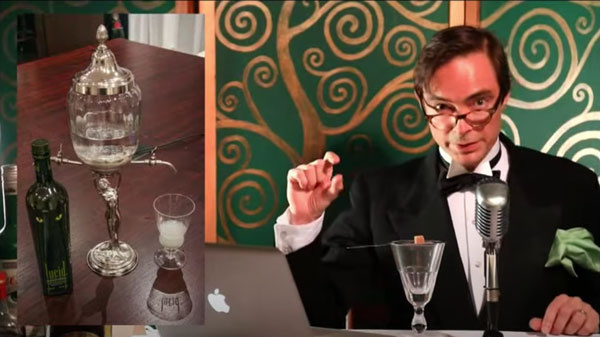 The absinthe livestream, lockdown. Broadcasting from home.For the absinthe talk, I actually posted samples out to a few members beforehand, so they could drink along during the evening. They had to produce a piece of artwork at the start and another at the end, once the absinthe had been consumed - a "scientific" experiment to see whether it really does confer artistic inspiration... But I mainly handed Resign! on because it was taking up about four full days every month, and during a period when the Candlelight Club wasn't making much money, I needed to reclaim some time for economic activity.
Half the appeal, you've said, is the chance to dress up. Do grown-ups still need permission?
When we started, I assumed it would appeal to vintage scenesters, and I feared there might simply not be enough of them to fill the place each time.
So I was surprised to find that most of our guests are ordinary people looking for something a bit different to do on a Saturday night. For them, the context is the only reason they're dressing up - I doubt they have an ever-present yen to wear a flapper dress, tweed suit or fez (although I have many friends who do). A themed event presents them with an environment in which it makes sense. I also suspect dress-up events work as a kind of social glue: guests are all bonded by being in costume, something they might feel awkward about on their own, but which in a room full of others dressed the same way becomes something they have in common.
That's my theory, anyway - but there must be a reason fancy-dress parties have been popular for generations.
The New Sheridan Club has moved from the Wheatsheaf in Rathbone Place - haunt of Orwell, Augustus John and Maclaren-Ross - to the Bishop's Finger, overlooking Smithfield. Do you miss the old room?
The Wheatsheaf had those louche literary connections, and the landlord had been very welcoming for twenty years - on our last night there we even presented him with a club tie. But, to be honest, many people prefer the Bishop's Finger, at least as far as the drinks are concerned, and the landlady is equally accommodating.
As you can tell from my own employment history, sometimes a forced change can be a Good Thing.
We now meet there on the last Wednesday of the month.
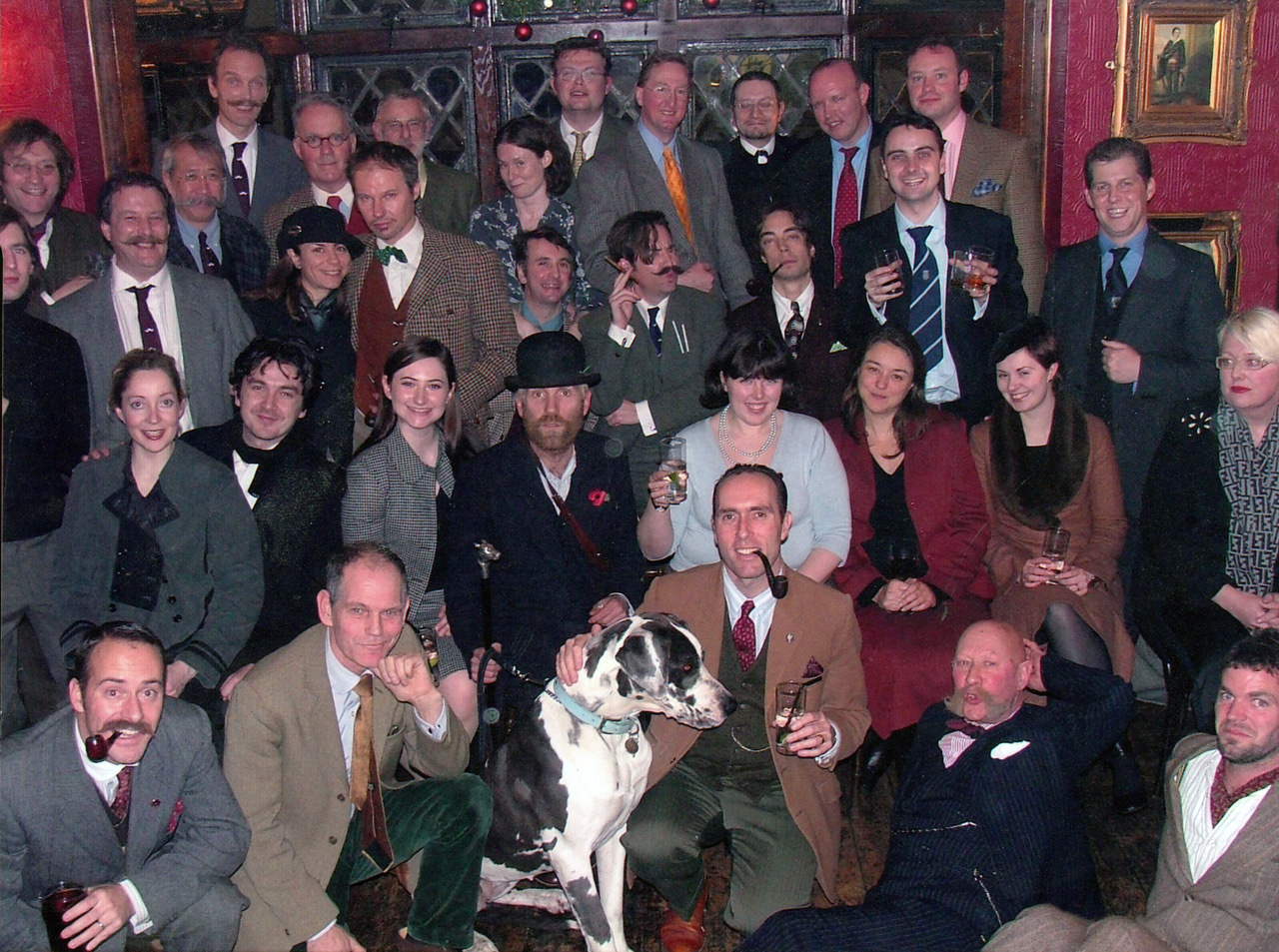
The most eccentric thing you've ever done?
I don't really consider myself eccentric. But then I've always maintained that genuine eccentrics don't think they're eccentric anyway - so that doesn't get you very far.
How do you see the Eccentric Club from where you sit?
Distantly. I've only actually been to one meeting, and now that I've moved from Greenwich all the way to Penzance in west Cornwall, it's even harder to get to London shindigs. Incidentally - does that move count as eccentric? Estate agents would ask if we were downsizing, but in fact we moved to a house twice the size of our old one, and the locals here usually start by asking why on earth we're living here. The new house, a Victorian villa we had to convert from a guest house back into a single residence, is a money pit in need of a lot of renovation. But, a year in, I've not once regretted the move.
Would you use a time machine?
I can't imagine that I would.
Much as I love Jazz Age culture, I'd far rather live in the safety of the twenty-first century and cherry-pick cultural morsels from the past.
It's all very well to fantasise about going back to kill Hitler and change history, but there are likely always to be unintended consequences. As for going forward - I find the twenty-first century confusing enough, so I'm in no rush to enter a future where we're in thrall to our AI overlords.
Three wishes from a genie - or have they all been granted?
A modestly huge sum of money would ease a few problems, but we're back in the realm of unintended consequences. I regularly reflect that I've been pretty lucky in life - born into a happy home, sixty years without any serious health issues, happily married for twenty-six years, not to mention all the privileges of being born a white man in the West in the twentieth century. So maybe I should give those three wishes to someone who really needs them.
A word of advice to your younger self?
I'm not sure I'd offer it. It would be tempting to urge myself to take more risks and follow my dreams, and so on, but much of what happens to us is about reacting to chance. I'd never have had the idea of the Candlelight Club if it weren't for that chance meeting outside an NSC party, yet it's been my main job for sixteen years. Meanwhile, I always actually intended to be a rock star - and for some reason that hasn't happened. Not yet, anyway.
Sixteen years of a party that was never meant to last past Christmas. What has the Jazz Age been standing in for all this time?
I've always been a fan of the style and culture of the 1920s and 1930s - even as a student I walked around in a fedora, and my twenty-first birthday party had a Jazz Age theme - so putting on a regular event with that theme was just an expression of my own interests. The challenge was finding a way for my enthusiasm to rub off on other people. I was already interested in cocktails and cocktail history, as well as in throwing parties, so it was really a coming together of many existing passions. In fact, when a good many friends heard about my career change, they responded by wondering why it had taken me so long.
The Candlelight Club pops up, by candlelight and at a secret address, roughly once a month in London. Clayton Hartley continues to edit, to play bass in the Furbelows, and to dress as though the twentieth century never quite got going. He now lives in Penzance.



Comments (0)
No comments yet.
Commenting is for subscribers. Sign in or subscribe to join the conversation.