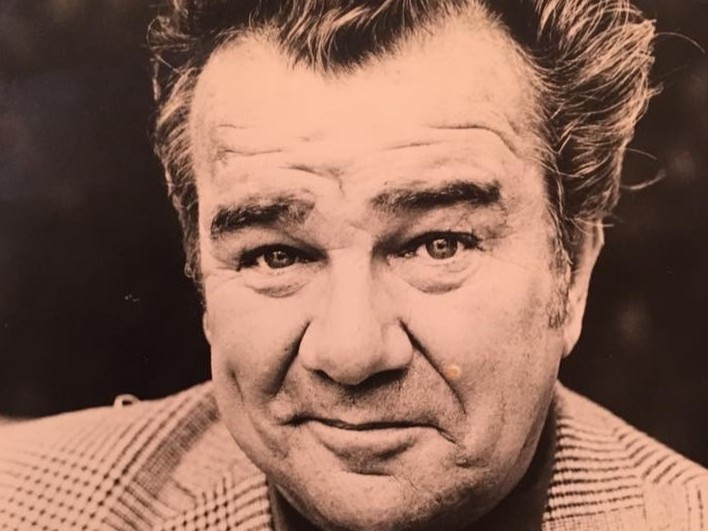
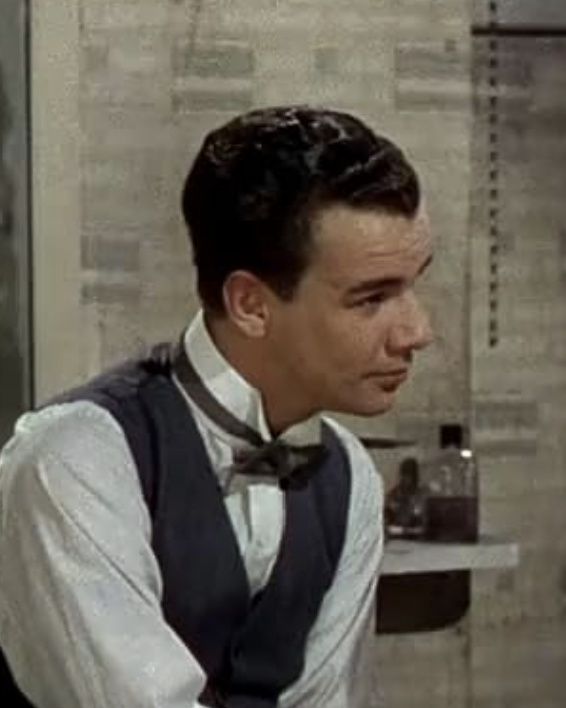
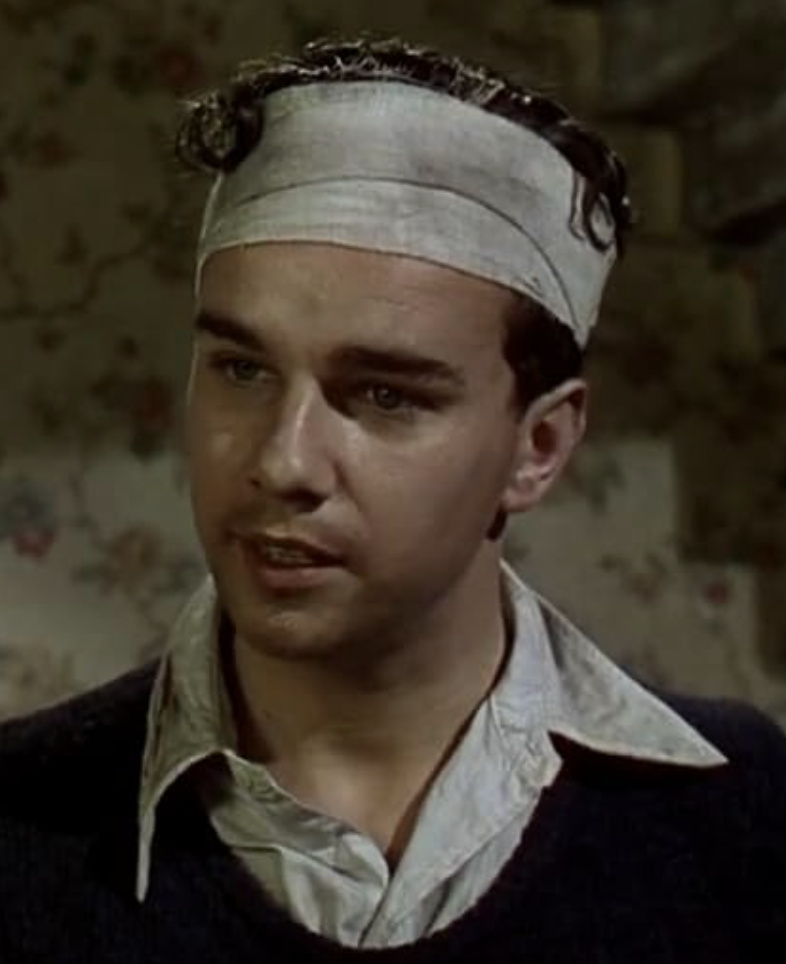
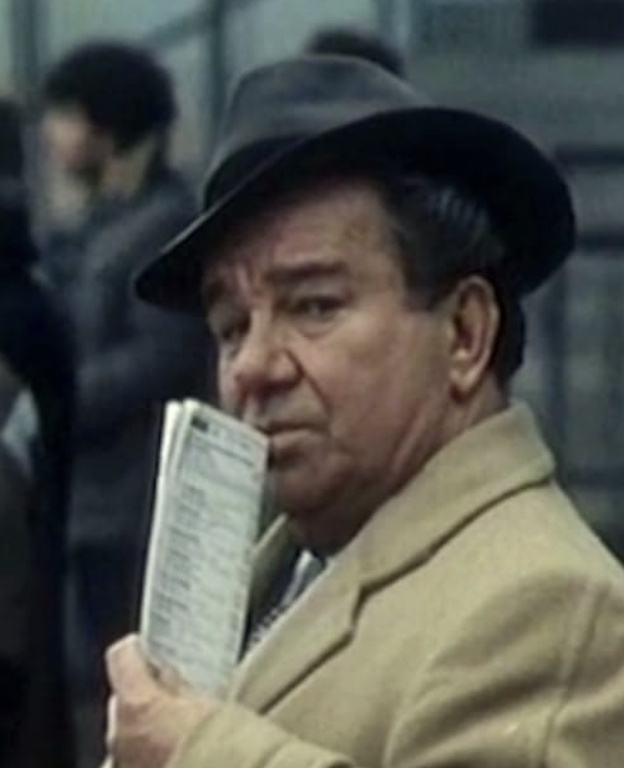
Every national cinema needs a face for its small dishonesties, and post-war Britain — rationed, spivvy, making do — needed one badly. It found John Blythe. From the late 'forties, whenever a script called for a young man in a loud tie with a ready patter and an eye on the exit, the casting directors reached for the same actor, and he never once let them down: Holiday Camp (1947), Good-Time Girl, Boys in Brown (1949) opposite the young Attenborough and Bogarde, the three Huggett films as 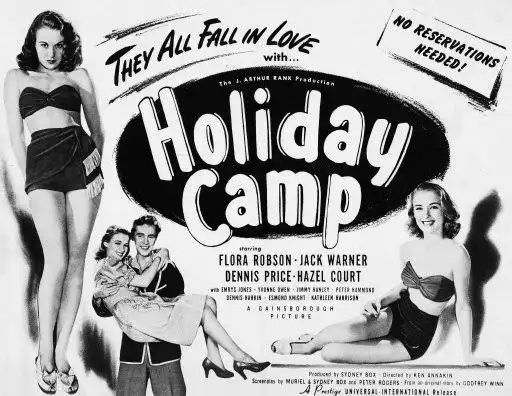 Gowan the garage owner, and dozens besides. He was the black market made flesh — the Del Boy of the 'forties, three decades before John Sullivan wrote his character, and working the same affection: the chancer you forgive because his schemes are really a kind of hope.
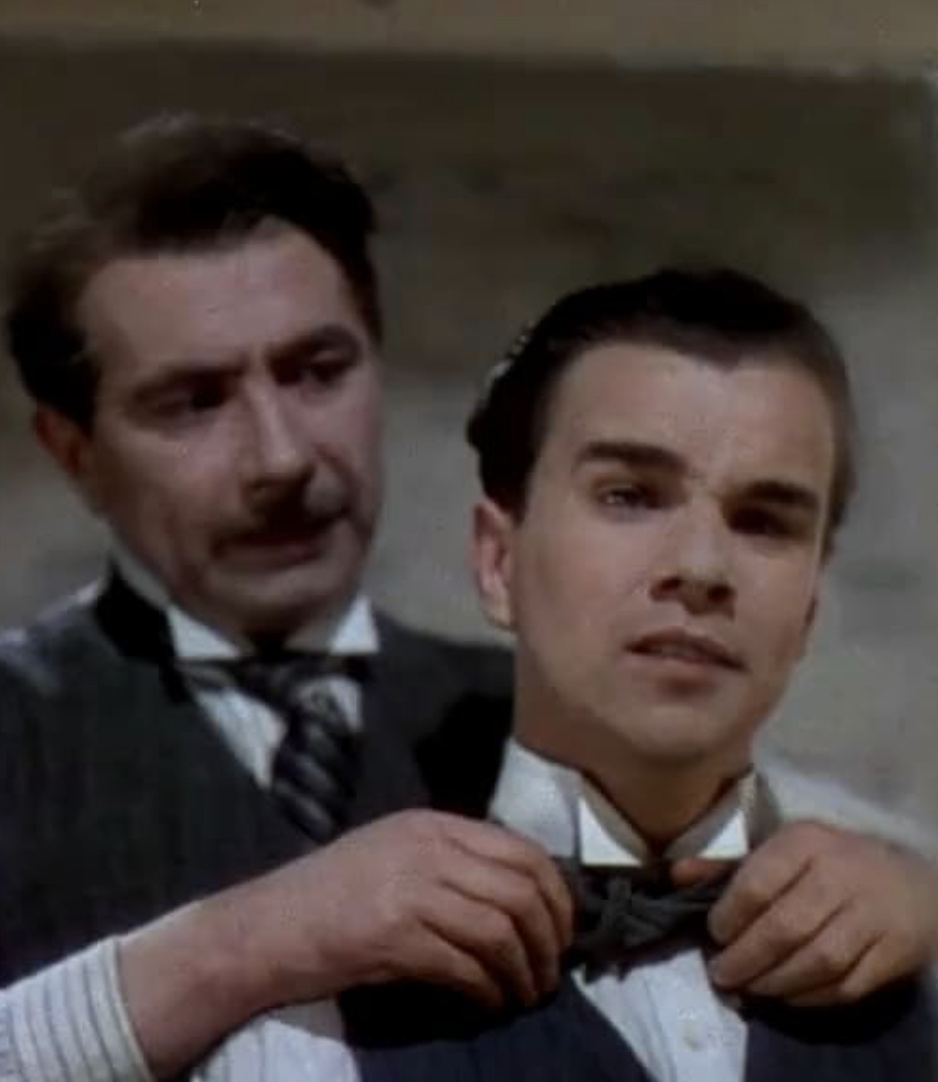
There is a skill in it the leading men are never asked to show. The rogue must be liked and distrusted in the same instant; the audience has to enjoy him while knowing better. Blythe did it with a lightness that never tipped into caricature — the wide boy as a social fact rather than a cartoon, a portrait of exactly the England the ration book had made. It should have been the springboard to leading roles; his turn as Reg Gibbons in Coward and Lean's This Happy Breed (1944) proved he had the range. But the camera had read his face and filed it under chancer, and he was shrewd enough to make the typecast his freehold rather than fight it. He gave a nation its favourite small-time rogue across more than eighty films, from Goodbye, Mr. Chips in 1939 to television work at the end of the 'eighties.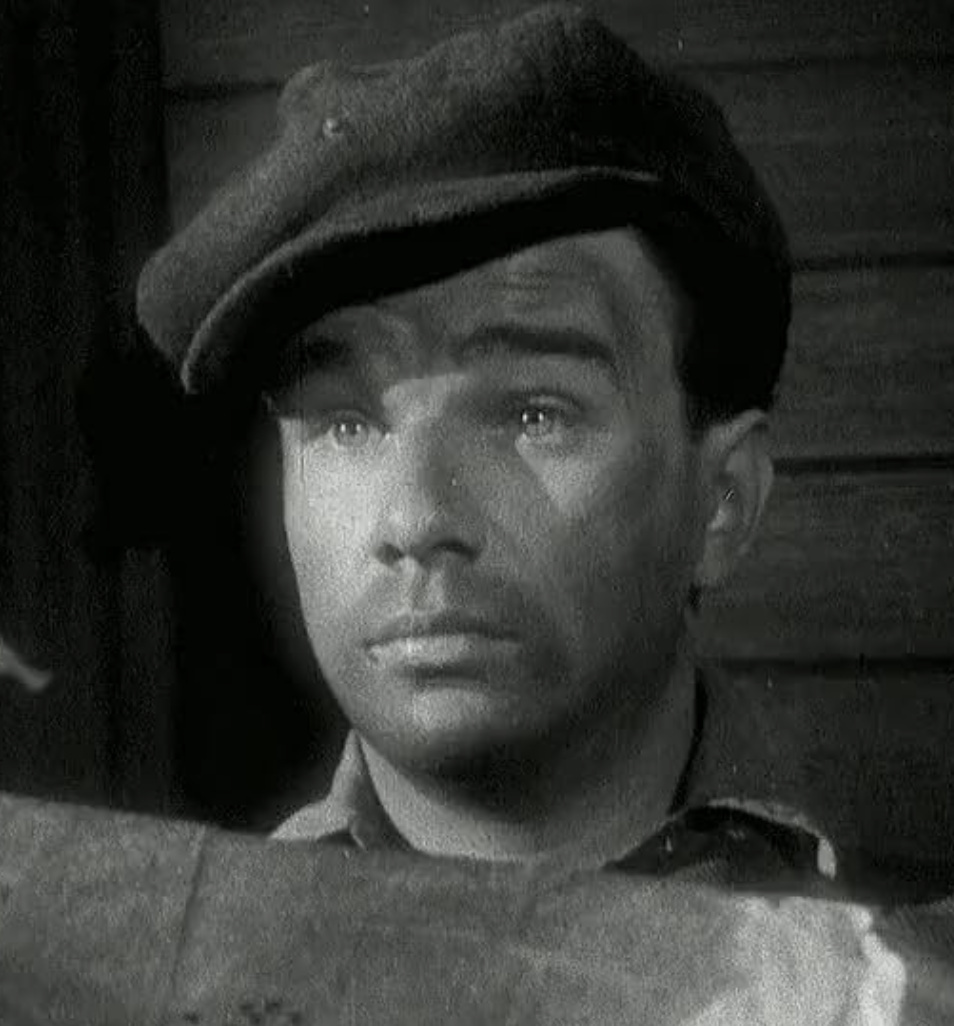
What none of the audiences knew — and what the reference books still do not record — is where the patter came from. Blythe was the grandson of John Arthur "Jack" Harrison, the wardrobe costumier of Bow Street, Covent Garden, who in November 1890 refounded the Eccentric Club at the old Pelican in Denman Street and made it predominantly the actors' club. His mother and both her sisters were West End actresses; his father was an actor; his aunt was the celebrated Phyllis Monkman; and two generations of Blythes worked for Noël Coward — his parents creating roles in Cavalcade (1931), their son in This Happy Breed thirteen years later. The boy learned his trade, quite literally, inside his grandfather's Club — the late hours, the company of actors, the art of the plausible line — and his snooker at the elbow of the Club marker, who happened to be Joe Davis, fifteen times world champion. A man does not acquire a better grounding in charm, timing and the working of a room. Quite how deep it went, and how funny the going was, he is about to tell you.
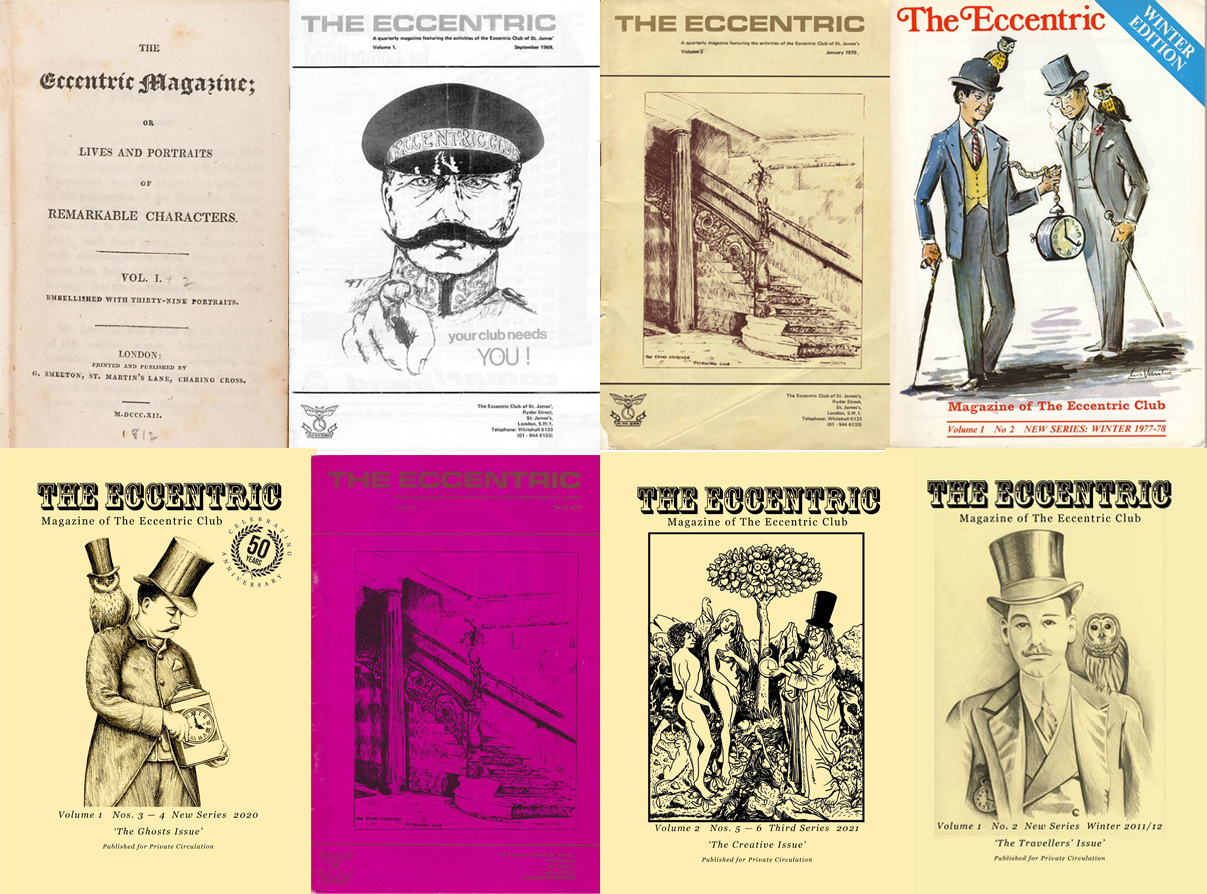
Some years ago Blythe set the whole of it down, with enormous warmth and a comedian's timing, in the pages of The Eccentric. It is reproduced here in full and unaltered. The occasional note in square brackets is ours; every other word is his.
Scanty sirens at a St.James's club — scandalous!
by John Blythe (written between 1967 and 1970)
If ever I play a place twice, it's a comeback. Having played an Indian Brave in 1925 at the age of 3 at the Theatre Royal, Drury Lane, before Queen Mary — who was not alone, I knew they would have me back — and they did.
I was invited to take over the male lead in Hello Dolly and I waited till everyone had gone after my first night and kissed the hallowed stage for having me back so soon. It was 1966.
A month ago, I had the same glowing feeling when I signed in as associate member of the Eccentric Club in the Lord's Taverners Book.
 This was a strange comeback because my first visit was around the time of my first performance at Drury Lane. Before you dash about trying to discover the licensing laws and age limits of those days, please let me explain, not only how this came about but also the reason I have been invited to write a piece in this magazine.
Even before I was born — and I know a lot about history, I was alive during a lot of it — a theatrical costumier and some friends founded the Eccentric. The costumier's name was Jack Harrison. He had three daughters. The eldest married an actor, Bobby Blythe, and he and his wife, Dorothy, had an offspring: me.
Many times in my youth I was allowed into the club, occasionally into the Owl's Roost, at other times into the billiard room for some tips from Joe, the marker then. And each visit has left its mark on me.
Today I have to use a digital watch because I cannot get used to clocks with more than two numerals on them, or those with the 1 on the right-hand side of the 12.
Joe's tips have enabled me to draw at snooker with Jack Warner, an extremely good player. I say 'draw' because Jack has difficulty differentiating between reds, black and brown, and by studiously ignoring his question during the last game, 'That is the red isn't it?', while aiming at the black, it is possible with innumerable seven aways to square the match.
Many moons ago, in the early hours, at the old Press Club, Dennis Castle and I did beat the editor of The Eccentric at snooker, but I had better not go into that or this piece might be rejected, and he already costs me enough per annum as I would not let a Thursday pass without an Evening News for his superb TV column.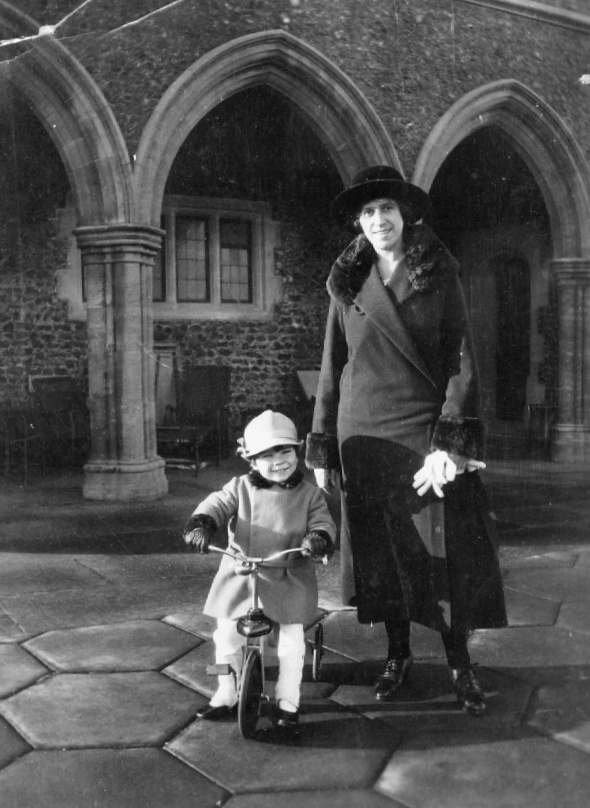
I remember Grandad as a strong, kind man with a great sense of humour and a great love for the Eccentric. This, I think, was proved when my mother and Aunt Phyllis wanted to go on the stage.
The acting profession for women was near to prostitution in the eyes of some in those days and he said: 'Good God, I'm running the Eccentric Club, a St James's club! If you persist in this tragedy, you're not using my name.'
Granny said: 'Very well, they can use my maiden name'; and that's why two of his actress daughters were Dorothy and Phyllis Monkman. Phyll made an enormous success, sometimes in what was then rather scanty and erotic dancing clothes, which — much to Grandad's chagrin — provoked many members to say to him: 'I say, Jack, I'd no idea you'd a gel like that what! I'd love to meet and dine her, don't y'know? How about an introduction?'
Both girls were successful and eventually the third daughter, Beryl, decided to go on the stage. By this time Grandad was basking a little in Phyll's reflected glory, and when Beryl told him her plans, he asked what she was going to call herself.
'Monkman, I suppose', she said; to which he replied: 'And what's wrong with your father's name?' And that is why the third actress daughter worked as Beryl Harrison.
His three sons-in-law, Laddie Cliff, Bobby Blythe, and Tolly Brightman, all knew the club well, as did my god-father, Sir Walter de Frece. I remember Vesta Tilley, his wife, was taking Mum and I to lunch at the Savoy before I returned to school and we dropped Walter off at the Eccentric on the way. He was not the most generous of men (a slight impediment in his reach!) and as he left us, Vesta coughed, nodded at his pocket and said: 'John is going back to school, Walter — you know?' Eventually he picked up his cue and said: 'Oh yes, here you are my boy, work hard', and slipped 2s. 6d. into my hand. Vesta saw it and said: 'Walter, you can't give him that.' He said: 'Oh no dear', took it out of my hand and strode straight into the club.
Another thing to have an effect on me was Grandad's deafness, which increased over the years. One lunchtime, Mr Gluckstein, of Salmon and Gluckstein, told Grandad that they were going to open up huge restaurants and feed the masses.
'Asses?', said Grandad.
'No, masses, Jack, we're going to feed the masses', said Gluckstein.
'Masses, you'll never get them in the club.'
'No, large buildings, we're going to call them corner houses — would you like to come in with us for a few thousand?', said Gluckstein.
Grandad uncupped his ear; he hadn't understood one word, and had unwittingly turned down the chance to become one of the founder shareholders of Joe Lyons!
I would just add that Grandad died peacefully in his sleep, and none of his heirs had anything to do with his demise!
Not long before the end, I spent a fortnight with him at a house he had taken to holiday in at Deal. There was he and I, his chauffeur, and a very attractive nurse. It was extremely hot and when Grandad asked me, aged about 15, what I would like to drink and I replied: 'tomato juice', he jumped down my throat and forbade me to touch the stuff.
Evidently, in the Owl's Roost he had seen it served only with sherry in it. However, he told me I could have as much as I liked of a bottled fruit cup that was there, mixed with lemonade. I adored it, though couldn't understand why I kept bumping into the furniture. Yes, the fruit drink he'd chosen for his young grandson was Pimms. However, this affected my life, too, as it released my teenage inhibitions and I discovered that nursing old gentlemen can be a very dull job for an attractive nurse. But that's another story.
I have always been with the thousands of his friends, acquaintances and people who benefited from his great charitable works in adoring Jack Harrison and was most proud to be asked to a memorial dinner at the club when he died. I know I spoke a few words and then his friends' hospitality, wines, cigars, and the promise of Honorary Membership took their toll and the next day gave me my first hangover.
So you can imagine, when the Eccentric offered associate membership to the Lord's Taverners, the first cheque was from the founder's now middle-aged grandson.
I only hope that my fellow Taverner members have as much enjoyment as the founder-members had and wished for all future Eccentrics. I know we will fit in and that does not always happen.
I am the happiest man alive to be able to walk through the same door and enjoy marvellous company in the same bar and restaurant as Grandad and all the great Eccentrics before me. I do not care which way the clock goes, I'm just delighted that the pendulum has swung back to allow Jack Harrison's flesh and blood to support the Eccentric still.
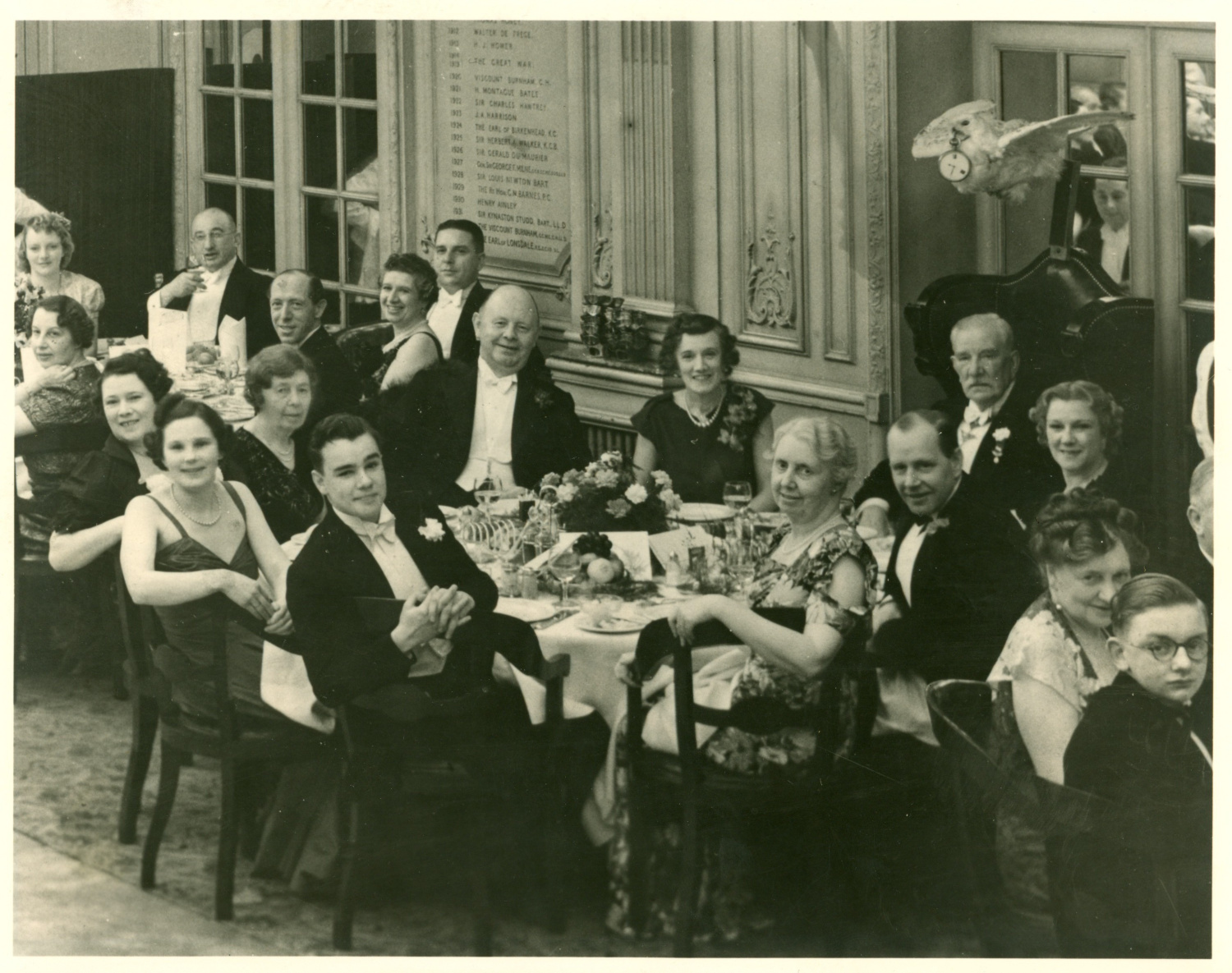
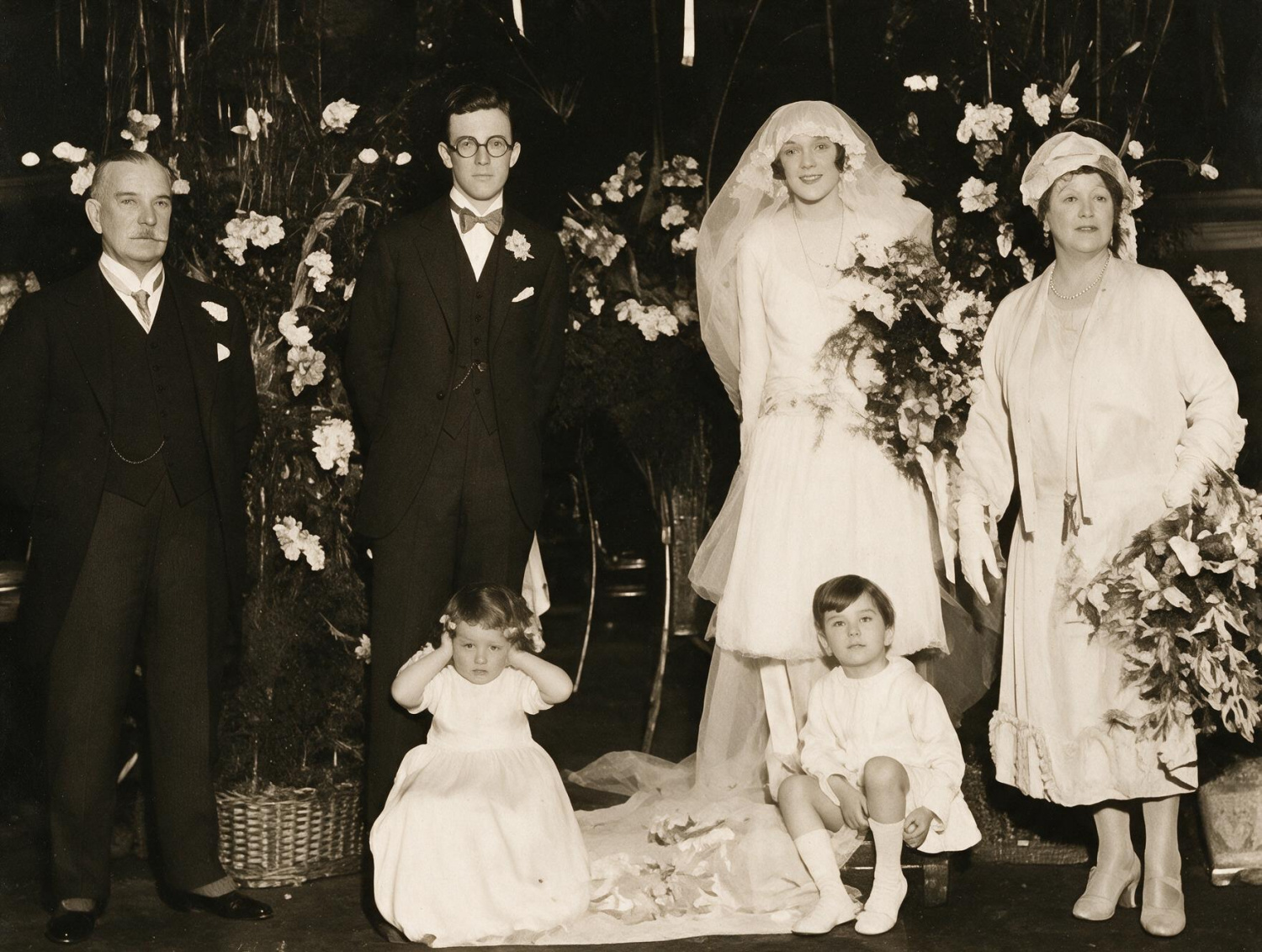
Jack Harrison and his family at the Eccentric Club, 1930s.
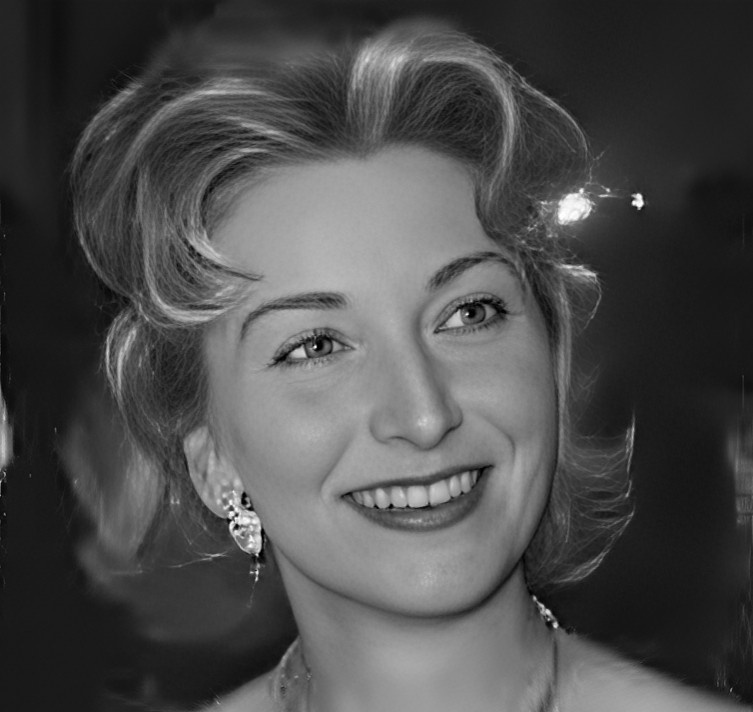 John Blythe married Nan (on the photo), who was with him to the end. He was born on the thirty-first of October 1921 and died in London on the twenty-fourth of November 1993, aged seventy-two — the founder's grandson, who lived to walk through the founder's door as a member in his own right. He told his story himself, and was proud of it. The Club, one likes to think, always knew.
Comments (0)
No comments yet.
Commenting is for subscribers. Sign in or subscribe to join the conversation.