On 31st May 1941, the Cretan dawn was still some hours off as three men stood on the bridge of one of the Royal Navy’s fastest destroyers, HMS Abdiel, staring at distant flashes and explosions on the horizon. The ship’s captain, Edward Pleydell-Bouverie, was steering a course towards Suda Bay, where a German Blitzkrieg was forcing the British into headlong retreat. His companions, Lt Col Laycock, commander of Layforce, a crack unit of 800 commandos, and his intelligence officer, Captain Waugh, knew then that their mission had changed from the defence of Crete to fighting a rearguard action which would help as many British troops as possible evacuate the island.
A few hours earlier, the naval captain and the two army officers had enjoyed a relaxing drink in the ward room in a scene reminiscent of an exclusive St James’s Street members’ club. Descended from a long line of Whig politicians and clubmen, Pleydell-Bouverie was the perfect host. His guests Bob Laycock, a member of White’s and a career soldier with a commission in the Horse Guards, and the celebrated novelist Evelyn Waugh, a member of Boodle's, were the perfect example of comradeship forged in the exigencies of war. After days of heavy fighting, only 200 men of Layforce, including Waugh and Laycock, were taken off the island at Sphakia on the final night-time escape run to Alexandria: the rest were heading into captivity.
Possessed of a mix of optimism, recklessness, a sense of patriotism, and a grim determination to see things through to the end, these individuals embodied the spirit of clubland which had seen earlier generations take up arms against Napoleon and fight with distinction in all of the conflicts and skirmishes from Crimea and the Anglo-Boer War through to the First World War. The family tradition of club membership passed from father to son. Fighting was in their DNA.
Old established St James’s Street clubs like White’s and Boodle’s encouraged high-stakes gaming and defined themselves as defending the old aristocratic order against the dangerous ideals of the French Revolution. Wellingtonian clubs like The Travellers, The Athenaeum and the Carlton, which had helped cement Britain’s role as de facto defenders of a new European and world order after the defeat of Napoleon, inspired a new generation of soldiers, sailors and airmen.
On Saturday 1 September 1940, after a whirlwind romance, Captain David Niven (35) of the Rifle Brigade was married to Miss Primula Rollo (22), a WAAF officer, at Huish in Wiltshire. The wedding, complete with short biographies of the bride, appeared in The Tatler a few days later. In the midst of the Battle of Britain, this was one of the few items of celebrity gossip to relieve an otherwise gloomy month.
Niven, who had started his career as a young subaltern in the Highland Light Infantry, resigned his commission and quit the regiment to try his luck as an actor in Hollywood. A well-connected adventurer with oodles of charm and persistence, Niven worked as an extra where his English accent could add authenticity to films like Mutiny on the Bounty. He had started to get noticed in the big studios. He had co-starred with Ginger Rogers in the film Bachelor Mother and in a film about the RAF called Dawn Patrol. But when war broke out, he immediately returned to England, where he looked to enlist in a line regiment. An old contact suggested the Rifle Brigade, and his past experience ensured he was fast-tracked, being promoted to the rank of captain in November 1939.
Someone suggested Niven put his name down for Boodle's. He was duly elected, and in search of adventure, Niven enrolled in the Commando, an elite fighting force. A friend, Rollo, was the niece of the Marquess of Downshire, Niven had his matinee idol looks and an officer’s commission to recommend him.
But clubs were not simply a recruiting ground for young men keen to make their mark. Their variety, niche specialisms and rich social networks endowed them with the unique advantage of being able to mobilise the best brains the country had to offer. Politicians, scientists, engineers and inventors, economists, lawyers, journalists and broadcasters all had an important part to play in what soon became a total war. Clubs like the Reform, the Garrick, the Carlton and the National Liberal Club, for example, were able to put together experts who could inform decision-making and join the newly established Ministry of Information and all of the many behind-the-scenes steering groups set up to direct Britain’s war effort.
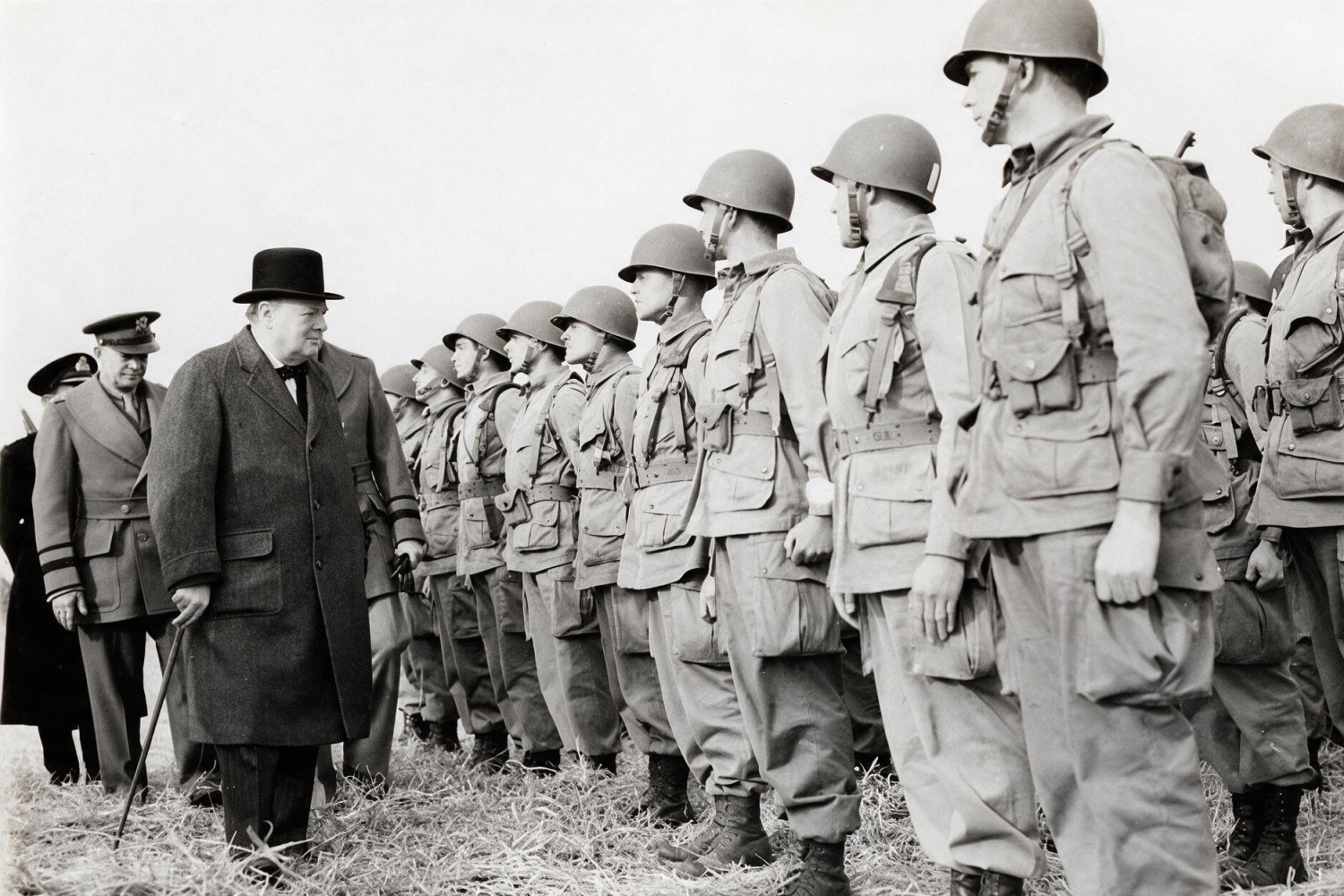
Being centrally located close to the centre of power, the clubs offered discreet and informal meeting places. Churchill’s preference for unconventional warfare led to the formation of the Commandos – units of highly motivated shock troops to spearhead attacks.
And to the SAS – the deceptively named Special Air Service – who were deployed behind enemy lines to disrupt communication. Founder of the SAS, David Stirling, a lieutenant in the Scots Guards and a member of White’s, could be said to have altered the course of the war by his sheer bloody-mindedness. A member of the Guards Commando, which was absorbed into Layforce in February 1941, Stirling narrowly missed being sent to defend Crete and almost certain capture when the island fell. Instead, he hatched a plan to form an unconventional force able to parachute behind enemy lines to attack German and Italian airfields in North Africa before disappearing into the desert. Bob Laycock and General Sir Claude Auchinleck gave the SAS their full support.
Some of the more individualistic young officers associated with counter-espionage and ingenious deceptions which helped divert the enemy in the run-up to D-Day were clubmen. Lieutenant Commander Ian Fleming of Naval Intelligence was a member of Boodle's and used the club as a cover for his clandestine activities and a refuge from departmental orthodoxy.
In the main, clubs were able to adapt, with several taking on a new meaningful role that made a major contribution to Britain’s war effort. At its most basic, clubs provided rooms at a reasonable cost, supplementing expensive and increasingly scarce West End hotel accommodation. Cellars were shored up and reinforced to create bomb shelters. They were a valuable resource for officers home on leave. Clubs continued to function with great difficulty as rules and charges were adapted to accommodate a membership now in considerable flux.
As war progressed, so a new breed of club sprang up – the “overseas club”. Many were on a temporary basis to offer accommodation and hospitality to allied forces and governments in exile who flooded into Britain’s capital city, like the famous US forces hang-out, Rainbow Corner in Shaftesbury Avenue. Women also played an increasing role and needed their own clubs and spaces where they could feel safe. Many traditional military clubs reconfigured their rules and their accommodation to cater for an influx of young women.
Counter-intuitively, the RAF Club in Piccadilly was no patriotic hotbed of heroes. This was mainly because, as a new service, the RAF did not recruit from that class of people likely to want to join a club for social kudos. In any case, airfields were widely dispersed and the fighter squadrons defending Britain and the “bomber boys” were fighting a war of attrition. That said, WW2 members included Pitcairn Hill, who led the Blenheim squadron of which Guy Gibson was a member, Charles Pickard, and AVM Basil Embury.
Up until now, clubland’s diverse role in supporting Britain’s war effort has been largely unacknowledged. As CP Snow comments in his book, The New Men:
London’s Clubs were our secret weapon.
Comments (0)
No comments yet.
Commenting is for subscribers. Sign in or subscribe to join the conversation.